![[DoRoyal] Logo](https://cdn.doroyal.com/2026/08/DoRoyal_by_Sidular-1-scaled.png)
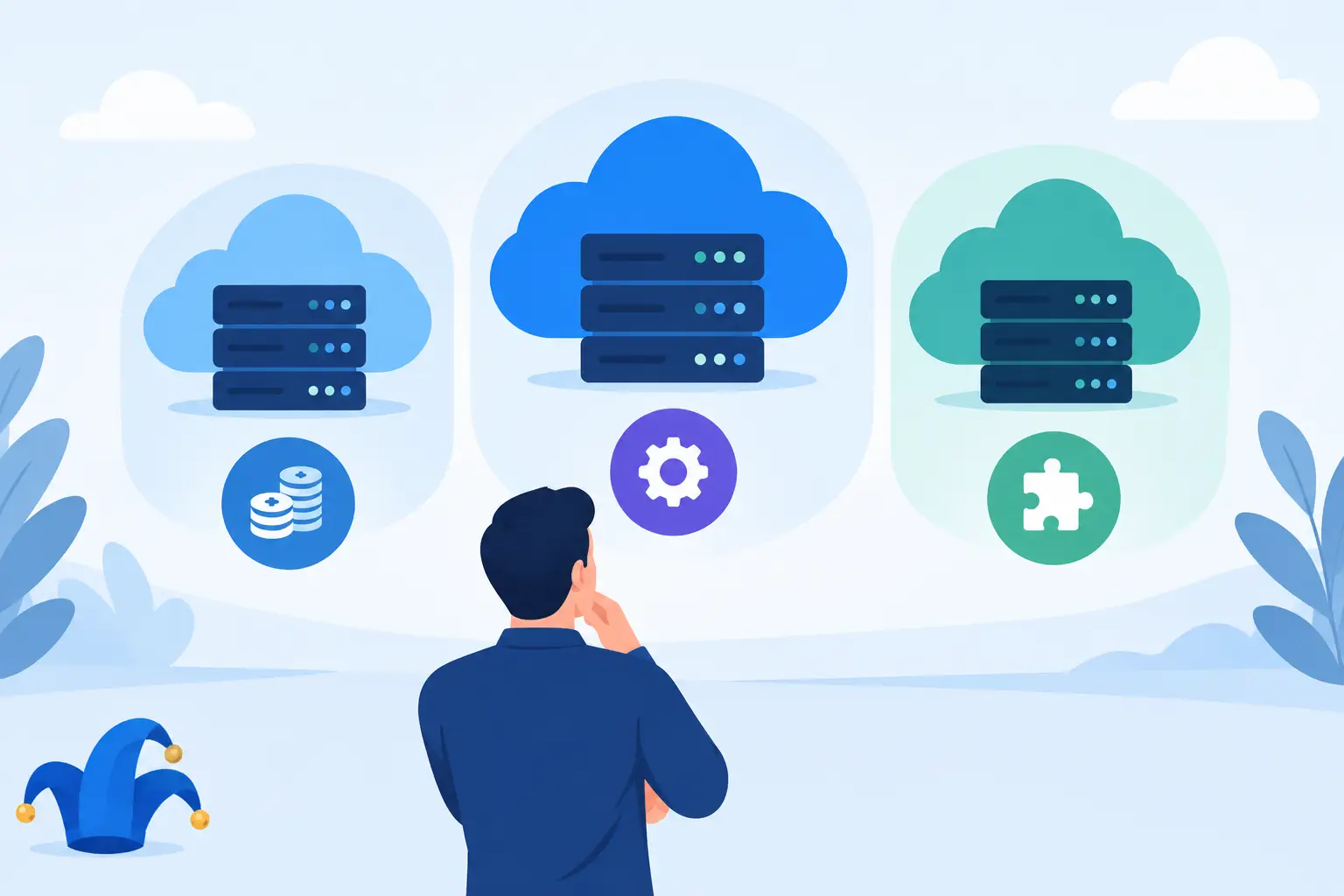
A hosting plan can look inexpensive until traffic rises, an update breaks something, or renewal pricing arrives. A useful VPS cloud comparison starts with the practical question: what level of control and capacity does your site actually need, and what are you prepared to manage yourself?
For developers, growing WordPress sites, online stores, and small businesses with more than a basic brochure site, both VPS and cloud hosting can be a sensible step up from shared hosting. They are not interchangeable, though. The better choice depends on how predictable your workload is, how much technical responsibility you want, and whether a simple monthly bill matters more than automatic scaling.
VPS vs. Cloud Hosting: The Core Difference
A virtual private server, or VPS, divides a physical server into isolated virtual environments. Your plan receives assigned resources such as CPU cores, memory, storage, and bandwidth. Other customers may use the same underlying hardware, but their activity should not consume the resources allocated to your VPS in the way it can on crowded shared hosting.
Cloud hosting spreads workloads across a group of connected servers. Instead of depending on one physical machine, a cloud platform can draw from a larger pool of infrastructure. In many cloud configurations, resources can be increased quickly, and workloads can move if a host server has a problem.
That distinction sounds simple, but the buying experience can be very different. A VPS usually gives you a defined package at a defined monthly price. Cloud services often price individual resources separately: compute time, storage, backups, data transfer, IP addresses, managed databases, and more. Cloud flexibility is valuable, but it can also make costs and configuration harder to predict.
VPS Cloud Comparison: Where Each Option Fits
The right answer is not that cloud is always more advanced or that a VPS is always cheaper. It depends on the application.
A VPS is often a strong fit when your resource needs are steady. A business site with regular traffic, a development environment, a small application, a game server, or several modest websites can benefit from fixed resources and a consistent bill. You can select a server size with enough room for normal growth, monitor usage, and upgrade when the numbers justify it.
Cloud hosting makes more sense when demand changes sharply or availability requirements are unusually high. Consider a ticket launch, a seasonal sales event, a campaign that may create sudden traffic spikes, or an application serving users across several regions. In those cases, being able to add capacity rapidly can be worth the extra operational and financial complexity.
For many small businesses, the workload is more predictable than cloud marketing suggests. If traffic grows from 5,000 to 25,000 monthly visitors over a year, there is usually time to move to a larger VPS plan. You may not need automatic, minute-by-minute scaling for a site that changes at a manageable pace.
Resource isolation and consistent performance
Both VPS and cloud environments can provide better isolation than shared hosting, but the details matter. With a VPS, ask whether CPU, RAM, and storage allocations are clearly stated. A plan described only as “high performance” tells you very little. You need to know what resources are assigned, what kind of storage is used, and whether there are reasonable limits on bandwidth or CPU activity.
Cloud performance depends heavily on the architecture you choose. A basic cloud instance may perform similarly to a VPS, while a multi-server setup with load balancing, separate database servers, and distributed storage can handle much more. That higher ceiling is real, but it requires a more deliberate design. Moving a standard website to cloud infrastructure does not automatically make it faster.
For a WordPress site, page caching, image optimization, a well-configured PHP environment, and an efficient theme often produce larger gains than choosing a complex cloud platform. Infrastructure matters, but it should solve a measurable bottleneck rather than become an expensive substitute for routine site maintenance.
Pricing: fixed monthly costs versus variable usage
A VPS is generally easier to budget. You choose a plan, pay a monthly or annual rate, and know the base cost before you deploy. Extras such as backups, licenses, and additional IP addresses can still affect the total, so read the order details instead of relying on a headline price.
Cloud billing can be efficient for short-term projects, testing, or systems that scale down when idle. It can also create surprises. Leaving unused instances running, retaining large snapshots, or transferring significant data can increase a bill quickly. Some providers offer spending alerts and caps, but those tools need to be configured before a spike occurs.
When comparing prices, use the same scenario for both options. Include the server itself, storage, backup retention, control panel licensing, monitoring, firewall services, and estimated data transfer. A $10 monthly instance is not comparable to a $10 VPS if the cloud deployment needs separate paid services to perform the same job.
Control, Management, and Support
A VPS commonly gives you root or administrator access. That is valuable if you need to install a particular web stack, tune database settings, run custom software, or choose a control panel. It also means you are responsible for much of the server administration unless you purchase managed service.
An unmanaged VPS is best for users who are comfortable with Linux administration or have someone who is. You should be able to apply security updates, manage SSH access, configure a firewall, review logs, set up backups, and recover from an error. A control panel can make routine website and email tasks easier, but it does not remove the need to maintain the operating system underneath it.
Cloud hosting can be either simpler or more demanding. A managed cloud application platform may remove server maintenance, but it can limit the access and software choices you have. Infrastructure-as-a-service cloud platforms provide extensive control, yet they often expect you to build the network, security rules, backups, and monitoring yourself.
This is where support should be evaluated carefully. “Managed” may mean the provider maintains host hardware and the virtualization layer, not that it will troubleshoot your application. Before purchasing, determine who handles operating system updates, malware cleanup, restore requests, performance tuning, and third-party software issues. Clear boundaries prevent frustrating assumptions later.
Reliability Is More Than a Uptime Claim
Cloud platforms are often associated with high availability because workloads can be spread across multiple systems. That capability only helps if the application is designed to use it. A single cloud virtual machine can still have downtime. A site with one database server, one application instance, and no tested backup process still has single points of failure.
A VPS on reliable hardware can be dependable for a great many websites. The key is matching expectations to the setup. If a few minutes of maintenance downtime is acceptable and a restore from backup would be manageable, a well-sized VPS may be entirely appropriate. If every minute of downtime creates major revenue loss, you need redundancy at the application, database, and DNS levels – not simply a cloud label.
Backups deserve separate attention. Snapshots are useful, but they are not always a complete backup strategy. Keep backups on a separate system when possible, set a retention period that matches your needs, and test a restoration before an emergency forces the issue. Whether you use VPS or cloud hosting, an untested backup is only a hopeful assumption.
Questions to Ask Before You Choose
Start with your current usage rather than an ambitious future estimate. Review average and peak traffic, memory use, storage growth, and whether visitors experience slowdowns at specific times. If you are leaving shared hosting because of limits, identify the exact limit you reached. Was it CPU usage, concurrent processes, database load, storage, or a restriction imposed by the provider?
Then consider how you will run the server. If you want root access, predictable costs, and the freedom to configure your environment, a VPS is often the straightforward choice. DoRoyal’s unmanaged VPS options suit customers who want that control without paying for a stack of enterprise cloud services they will not use.
If demand is volatile, your application needs to stay available through component failures, or you have technical resources to design and monitor distributed infrastructure, cloud hosting may justify its added complexity. Be honest about the operating work involved. Paying for capacity is one cost; maintaining a reliable architecture is another.
Finally, avoid buying far beyond your current needs. Choose an environment with a clear upgrade path, keep independent backups, document your configuration, and leave room in the budget for the services that protect your data. The best hosting decision is usually the one that gives your site enough headroom without making everyday management harder than it needs to be.